
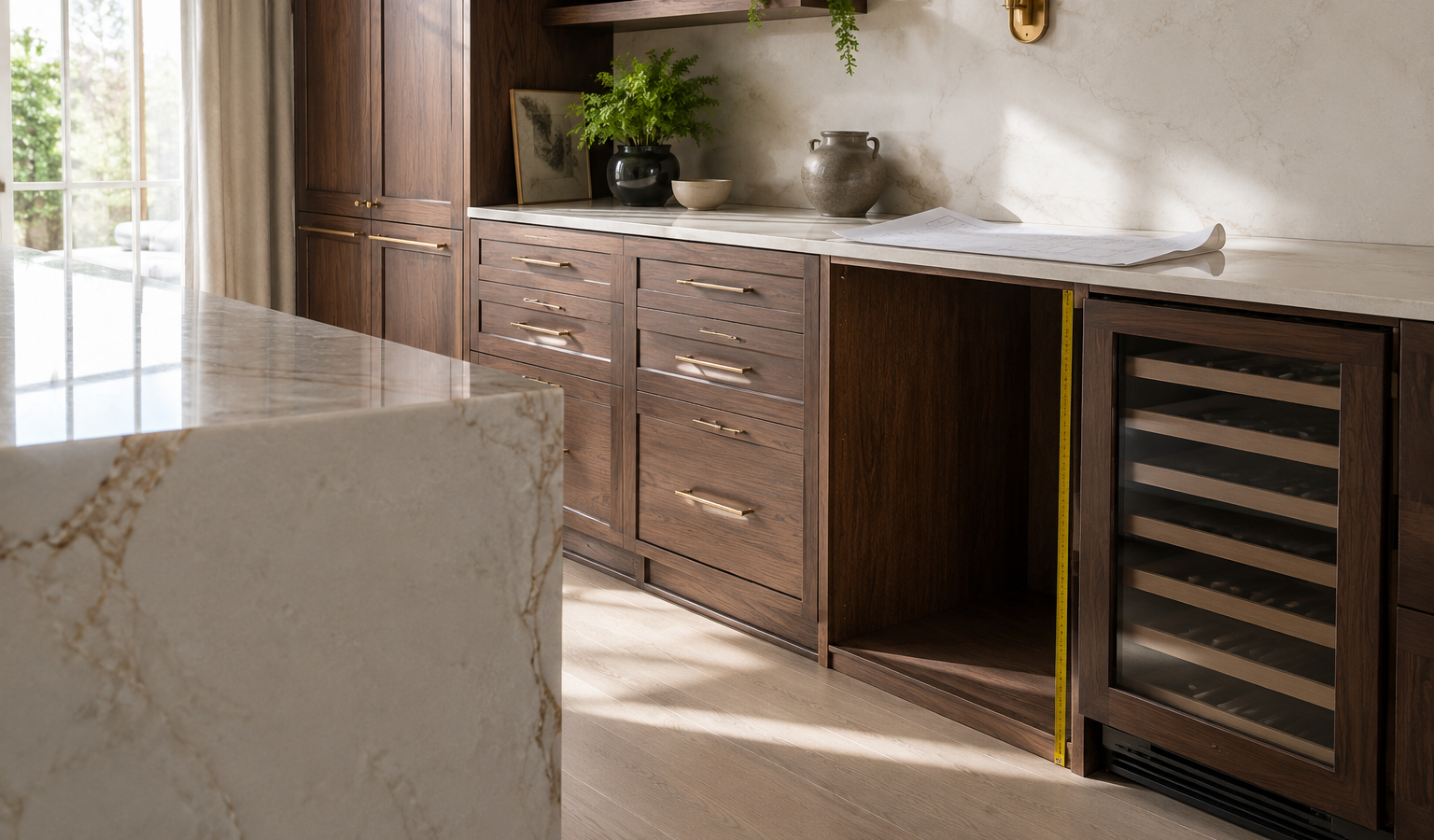
How to Maintain a U-Line Outdoor Refrigerator
Outdoor refrigeration benefits from clean ventilation, complete door sealing, reasonable loading, and protection from unnecessary heat exposure. Routine care makes true cooling faults easier to distinguish from…

Maintaining a U-Line outdoor refrigerator comes down to keeping the front grille clear, cleaning the stainless and gaskets, checking that the door closes fully, and keeping the unit out of direct sun and heat. These checks make a real cooling fault easier to spot, and they should be done with the model’s own manual open.
Outdoor refrigeration benefits from clean ventilation, complete door sealing, reasonable loading, and protection from unnecessary heat exposure. Routine care makes true cooling faults easier to distinguish from environmental conditions.
A Practical Maintenance Routine
- Keep the front grille and ventilation path clear.
- Clean gaskets and check door closure.
- Remove heavy debris around the installation without blocking drainage or ventilation.
| Maintenance task | What it protects against | What you can safely do |
|---|---|---|
| Front grille and ventilation | Poor cooling and uneven temperatures | Keep it free of leaves, dust, and stored items |
| Gaskets and door | Warm air leaking in and frost | Wipe the gasket and check that it touches all the way around |
| Stainless exterior | Discoloration from chemicals and salt air | Clean with an appropriate stainless cleaner and avoid steel wool |
| Condenser | Overheating from lint and dust | Follow your manual, with power disconnected first |
U-Line-Specific Context
U-Line products use compact, front-vented and undercounter-oriented refrigeration architecture. Exact model, installation type, water/drain configuration, and controller generation matter before technical information is applied. Ice machines add water level, drain, cleaning, refrigeration, pump/auger/harvest, and sensor stages that should be evaluated in sequence.
Maintenance should preserve front ventilation, door and drawer sealing, clean water circulation where applicable, normal drainage, proper loading, and owner-accessible cleanliness.
What separates an outdoor model from an indoor one?
Warranty and operating guidance differ by model. A guide for one U-Line nugget-ice model says warranty applies to outdoor operation only for units designed for outdoor use by model and serial number, and a clear-ice guide says indoor-designated models are for interior use only. Confirm your unit is outdoor-designated before relying on outdoor care advice.
The outdoor drawer unit’s guide for one model lists the same rated ambient range as indoor models, with the unit kept out of direct sunlight, and no extra ventilation clearance beyond the front grille. That makes the grille the maintenance item that matters most.
When Maintenance Has Reached Its Limit
If the refrigerator cannot hold temperature after routine care, service may need to evaluate fans, sensors, controls, compressor operation, and the sealed system. Do the checks in a sensible order: grille first, then gaskets and door closure, then the exterior, so each result is clear before you move on.
How should you clean stainless and the condenser?
The use-and-care manual for one U-Line refrigerator says stainless should be cleaned about monthly with a stainless cleaner, and that chlorine, pool chemicals, saltwater, and bleach-based cleaners can discolor it. It adds that some installations near pools or salt air need more frequent cleaning.
The same manual puts condenser cleaning at about every six months, depending on the environment, using a soft brush or a vacuum and no cleaner of any kind. Disconnect power first, because the fins are sharp. Outdoor kitchens that collect dust and debris may need it more often, so follow your manual.
If the symptom returns after correct routine care, move to diagnosis rather than stronger chemicals, repeated resets, or random parts.
How do you store an outdoor refrigerator between seasons?
If the refrigerator will sit unused, the manual for one model says to empty it, unplug it, thaw any ice, dry the interior, and prop the door open at least two inches so mold does not form. Reversing those steps when you restart it means wiping the interior with mild nonabrasive detergent and warm water, since solvent-based or abrasive cleaners can leave a taste or odor. Let it run before loading it again.
What to Record Before Service
Write down the complete U-Line model number, product family, indoor/outdoor and panel-ready status, exact symptom, measured temperature where relevant, ice-production stage where relevant, water/drain behavior, and any E-code, Er-code, flashing LED, cleaning reminder, door message, or communication warning before reset.
Good observations reduce repeated owner checks and let the technician choose a focused test path. A cabinet that is warm after a large load, an ice machine that fills but does not harvest, and an ice machine that never receives water are three different diagnostic starting points.
Error-Code and Platform Context
Installation and Access Context
Leave undercounter, panel-ready, drawer, or outdoor U-Line products installed unless the service team specifically requests access. Moving a unit can disturb cabinetry, flooring, front-ventilation clearances, water lines, drains, or electrical connections.
For condos, high-rises, outdoor kitchens, and custom bars, include loading, elevator, shutoff, drainage, and clearance details when booking.
Common Mistakes to Avoid
Do not clear a useful code before recording it. Do not use a commercial-controller meaning for a residential appliance because the letters look the same. Do not treat a cleaning reminder or steady-status light as a hardware fault.
One controlled owner-level check is useful when it answers a question. Repeated resets, disassembly, or aggressive cleaning can remove evidence or create a second problem.
Outdoor Refrigerator Maintenance Questions
How often should I clean a U-Line outdoor refrigerator?
One model’s manual suggests the condenser about every six months and the stainless about monthly, with more frequent cleaning in demanding environments. Your own manual sets the schedule for your model.
What should I do with an outdoor unit before cold weather?
One manual says that if the unit may be exposed to 40F or below, follow its extended non-use steps. That means emptying it, unplugging, drying the interior, and propping the door open to prevent mold.
Can I use any cleaner on the stainless?
Avoid chlorine, bleach, and pool chemicals on the exterior, and never use cleaner on the condenser. Mild nonabrasive detergent is the documented choice for the interior.
Related U-Line Reading
- For adjacent symptoms, read U-Line Refrigerator Not Cooling: Separate Ventilation, Door Sealing, and the Cooling System and U-Line Beverage Center Not Cooling: Check Airflow, Loading, and Temperature Recovery.
Similar Articles
- U-Line Wine Refrigerator Not Cooling: One Zone, Both Zones, or the Whole Cabinet?
- U-Line Refrigerator Not Cooling: Separate Ventilation, Door Sealing, and the Cooling System
- U-Line Beverage Center Not Cooling: Check Airflow, Loading, and Temperature Recovery
- U-Line Wine Refrigerator Not Cooling: One Zone, Both Zones, or the Whole Cabinet?

Turn this guide into a clear on-site diagnosis
FAQ
Frequently asked questions
Use one normal model-approved restart when appropriate and record any code or message first. If the symptom returns, repeated resets are not a repair.
No. The technical source preserves model and control-platform applicability because the same raw code can differ by generation.
Do not perform live electrical, internal pump/control, or sealed-refrigeration work. Leave tightly fitted units installed unless safe access is planned.
U-Line has multiple residential generations, ice-machine architectures, dual-zone products, and separate commercial controllers. Exact model identity prevents the wrong diagnostic path.
Keep reading
More from the guides
How to Extend the Life of Your U-Line Refrigerator, Wine Cooler, or Ice Maker
Long appliance life comes from protecting the conditions each U-Line product needs: clear ventilation, good door sealing, normal water and drain flow, correct cleaning, and stable power.
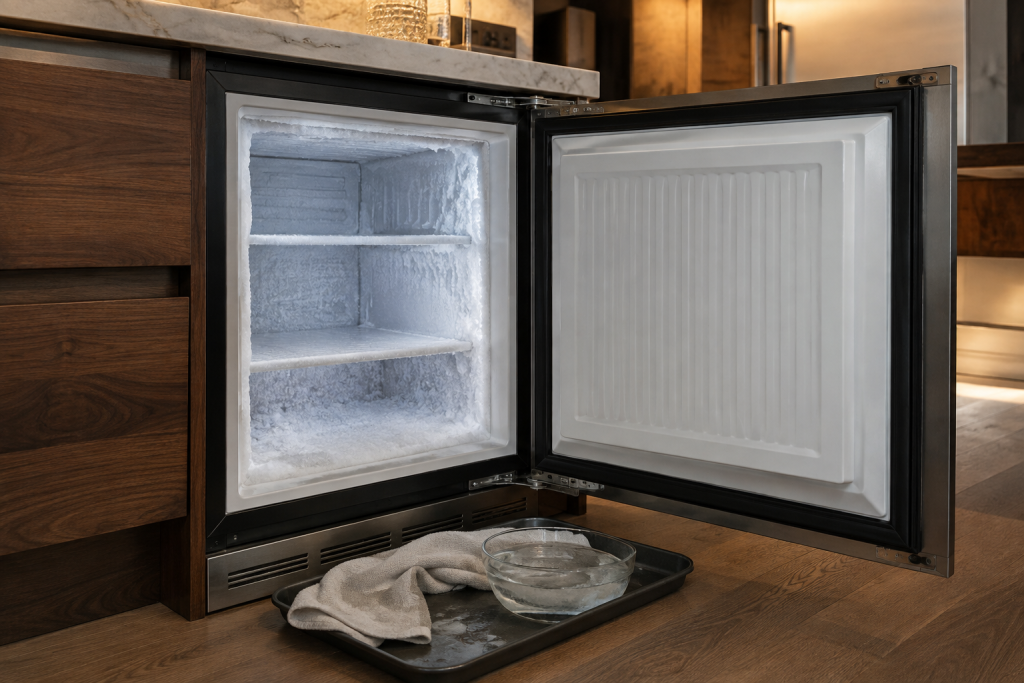
How to Clean U-Line Refrigerator Condenser and Ventilation Areas Safely
Front-vented undercounter refrigeration needs clear heat rejection. Dust, pet hair, or blocked grilles can raise operating temperature and run time.
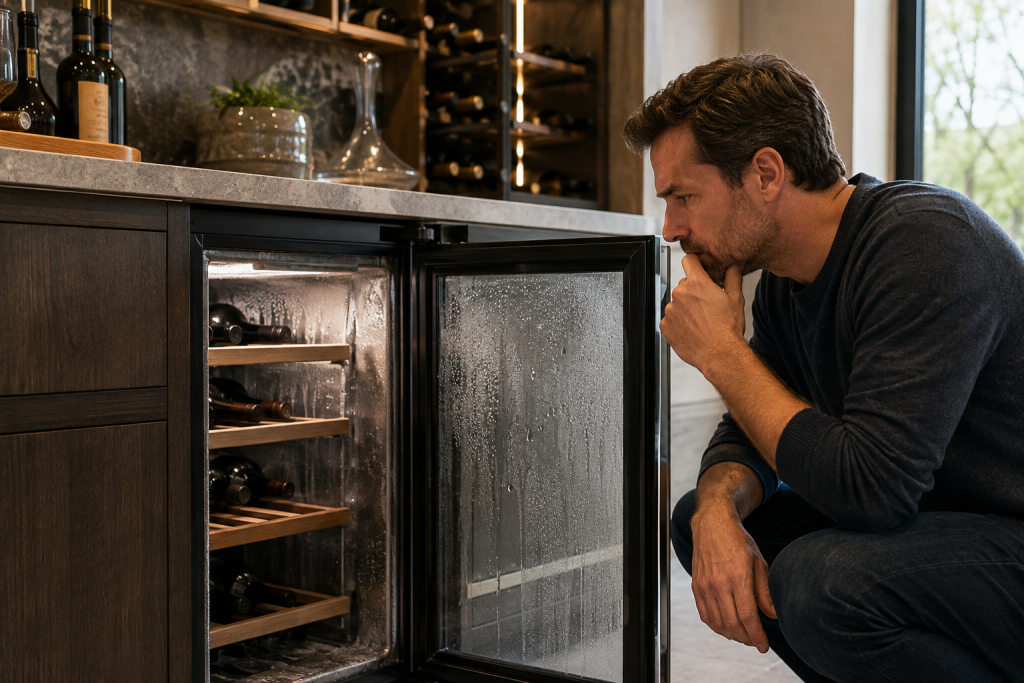
U-Line Wine Refrigerator Condensation: Prevention Starts With Door Sealing and Humidity
Condensation can increase with humid room air, frequent door openings, warm bottle loading, gasket contamination, or a door that does not fully seal. A moisture pattern helps distinguish…
Turn this guide into a clear on-site diagnosis
Book a repair
Tell us what’s wrong — we’ll take it from there
Share a few details and we’ll confirm an appointment. Prefer to talk? Call us and we’ll help right away.
Phone
(844) 706-1091
Hours
Mon–Sat: 8:00 AM – 7:00 PM
Service area
Serving Miami, New York, Houston, Los Angeles and San Diego metro areas.
Response time
Response time varies by location and service availability.
Request your repair
Fill in the form below and we’ll confirm an appointment.