
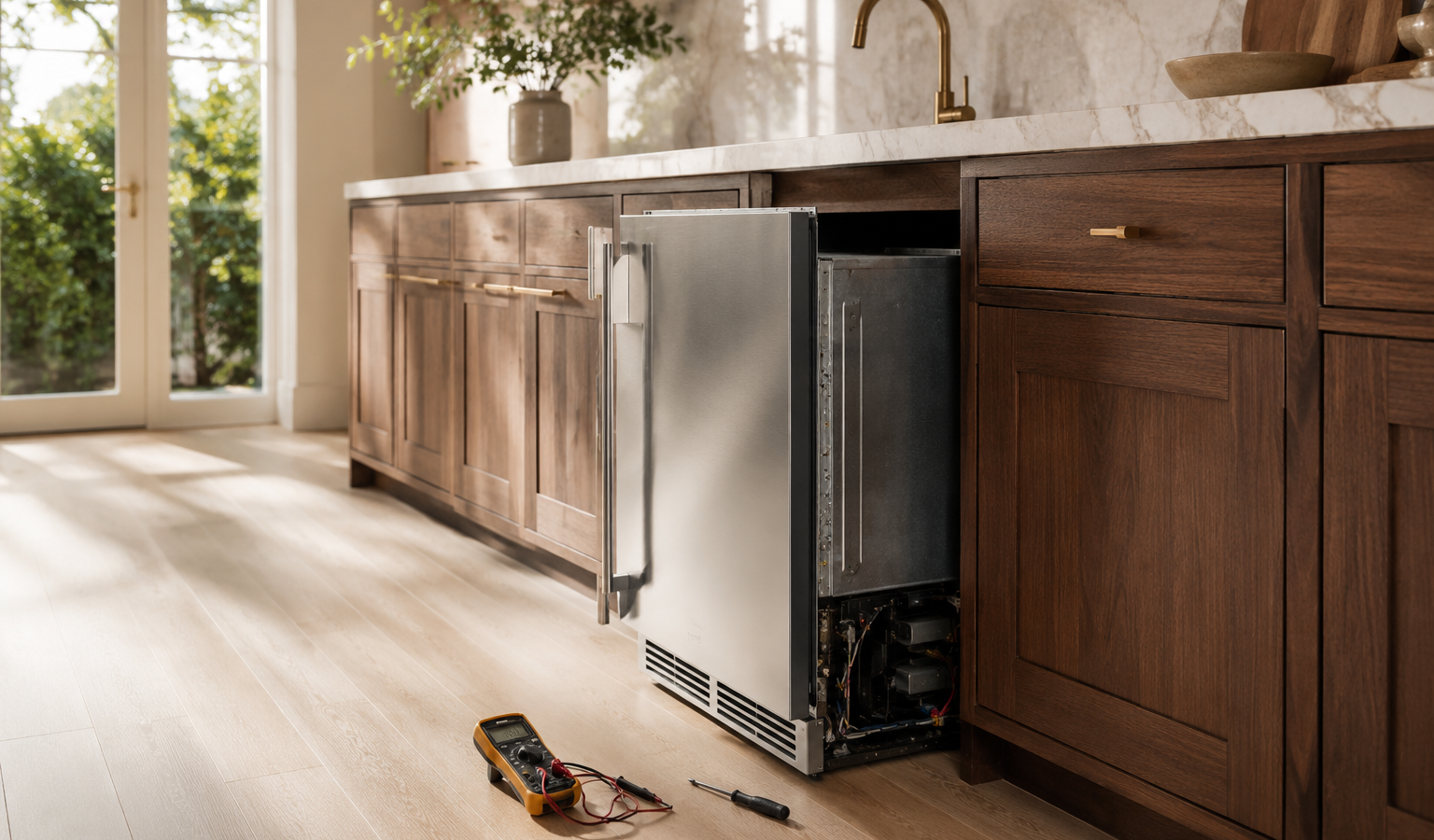
U-Line Refrigerator Frost Buildup: Causes and Solutions
Frost inside a U-Line refrigerator signals moist air, seal trouble, or defrost faults—learn what to check safely.

Frost is frozen evidence of moisture and cold
A light dusting near the evaporator after heavy door traffic can clear on its own. Thick ice sheets, frosted packages, or frost that returns days after a manual thaw mean a U-Line refrigerator is importing humidity faster than it can manage—or that automatic defrost has quit.
Leading causes in undercounter installs
- Door or drawer seals that leak.
- Interior lights or switches keeping doors effectively “ajar” in control logic.
- Blocked drains that turn meltwater into refreeze ice dams.
- Failed defrost heaters or sensors on frost-free designs.
- Owners propping doors during events.
Sane responses
- Thawing naturally with food relocated
- Cleaning gaskets and confirming closure
- Photographing frost patterns before they melt
Damaging responses
- Chipping ice with knives
- Using high-heat guns on plastic liners
- Disabling defrost components
Read the frost map
Frost only at the door perimeter often means infiltration. A uniform evaporator blanket that returns quickly after thaw leans toward defrost or airflow faults. Ice dams at a drain trough suggest meltwater that cannot leave. Photograph before you thaw—those patterns disappear and take the diagnosis with them.
Drawer models frost differently: a slightly open upper drawer can seed frost while the lower cavity still looks fine. Check latch engagement on every cavity before assuming a shared sealed-system crisis.
After thaw, wipe dry and run closed for a day with minimal openings. Immediate re-frost with good seals is your cue to book service rather than schedule another weekend melt.
After the thaw
If frost returns quickly with good sealing habits, schedule testing. Independent techs evaluate defrost circuits, fans, and seals together. Use refrigerator repair for door models and drawer refrigerator repair when pull-outs are involved. Check error codes if shown, then contact.
Manual defrost discipline
When you must thaw, relocate food, catch meltwater with towels, and allow complete melting before restarting. Partial thaws leave ice cores that regrow overnight. Time the return of frost: forty-eight hours versus two weeks tells different stories about seals versus defrost hardware.
Skip hair dryers on high heat near plastic liners; warped interiors create new leak paths around gaskets. Patience is cheaper than a liner, and safer than improvising with open flames or sharp scrapers. If frost returns on a predictable daily schedule, write that cadence down—it is one of the most useful clues you can hand a technician on an undercounter call. Patterns beat guesses every time on stubborn frost buildup complaints like these.

Turn this guide into a clear on-site diagnosis
FAQ
Frequently asked questions
Tiny amounts after openings can be; progressive sheets are not.
Lukewarm towels are safer than cascading hot water near electrics.
Heavy frost reduces efficiency and can lead to longer runtimes and secondary faults.
Keep reading
More from the guides
U-Line Appliance Not Turning On: Power and Control Troubleshooting
Dead U-Line fridge, wine, or ice unit? Work through outlet, GFCI, and control basics before assuming the main board failed.
U-Line Outdoor Refrigerator Not Cooling in Hot Weather
Outdoor U-Line refrigerators face brutal ambient heat. Learn what is normal in summer and when cooling loss needs service.
U-Line Refrigerator Drawer Won’t Close or Seal
When a U-Line refrigerator drawer won’t latch or seal, check obstacles, slide alignment, and gasket condition before forcing it.
Turn this guide into a clear on-site diagnosis
Book a repair
Tell us what’s wrong — we’ll take it from there
Share a few details and we’ll confirm an appointment. Prefer to talk? Call us and we’ll help right away.
Address
1200 Brickell Ave, Suite 400, Miami, FL 33131
Phone
(305) 555-0142
Email
service@example.com
Hours
Mon–Sat: 8:00 AM – 7:00 PM
Service area
Serving Miami, New York, Houston, Los Angeles and San Diego metro areas.
Response time
Same-day and next-day appointments in most areas.
Request your repair
Fill in the form below and we’ll confirm an appointment.