
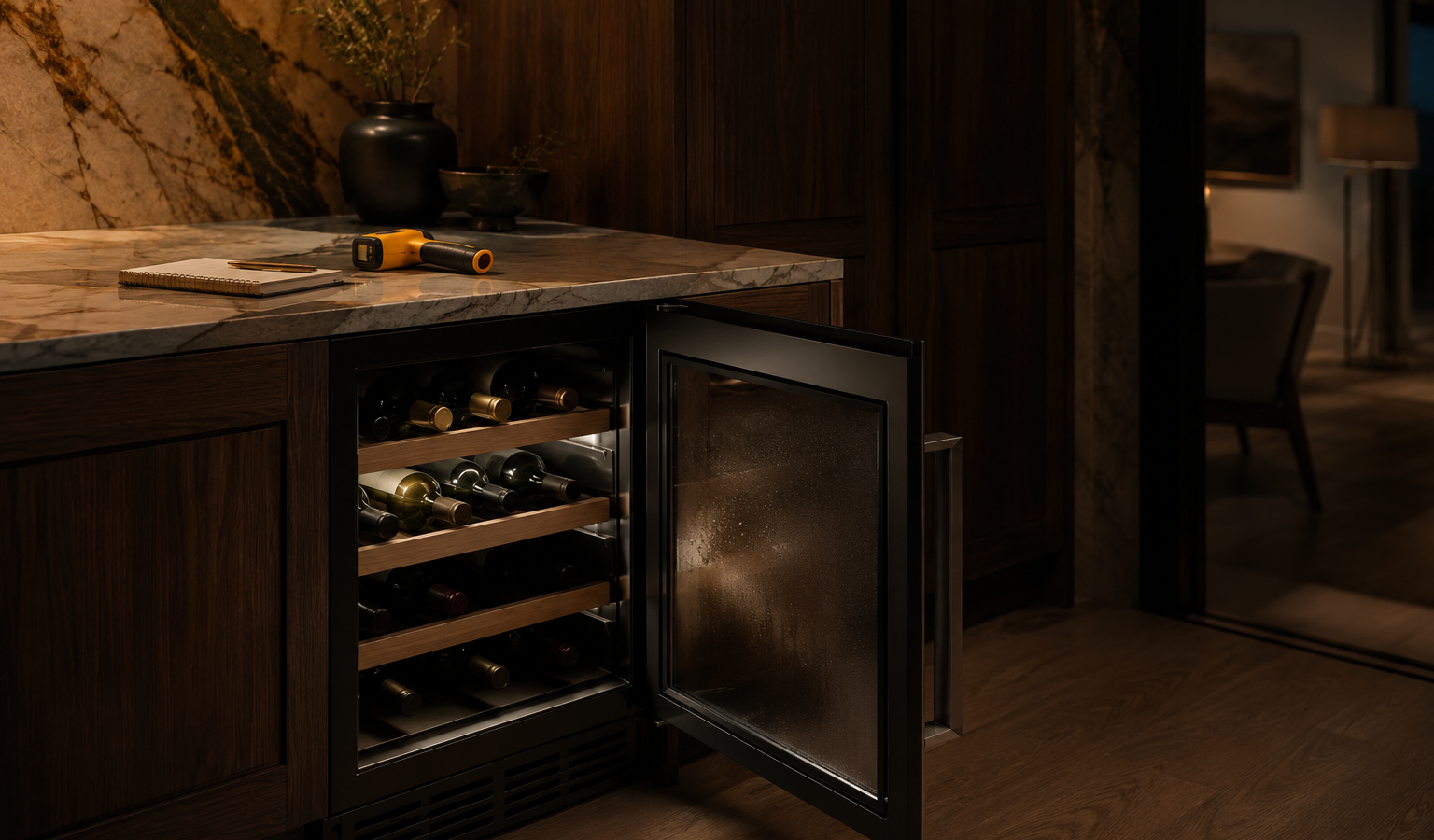
U-Line Outdoor Refrigerator Not Cooling in Hot Weather
Outdoor U-Line refrigerators face brutal ambient heat. Learn what is normal in summer and when cooling loss needs service.

Outdoor ratings are not magic air conditioning
A U-Line outdoor refrigerator is built for weather exposure and higher ambients than indoor siblings—but every machine has a ceiling. On a 100 °F patio with the door opening every ten minutes, long runtimes and slower pull-down are expected. True failure is a cabinet that cannot approach its setpoint after a long closed recovery, or a unit that overheats, trips, or smells hot.
Summer-specific checks
- Confirm the model is actually outdoor-rated—indoor units on patios fail early.
- Clear leaves, cottonwood fluff, and grill grease from condenser intakes.
- Provide shade where possible without blocking exhaust airflow.
- Avoid installing tight to a sun-baked stucco wall that radiates heat all evening.
- Verify GFCI outlets are not nuisance-tripping mid-cycle.
Heat-wave tactics
- Shade and airflow improvements
- Seasonal coil cleaning with power off
- Thermometer verification during peak heat
Dangerous tactics
- Spraying water into electrical areas to “cool it”
- Adding refrigerant because it is hot outside
- Bypassing thermal protectors
Island grills and shared heat
Outdoor kitchens stack heat sources: grills, smokers, pizza ovens, and dark stone that stores afternoon sun. A refrigerator door that faces a glowing grill may meet its ambient limit even when the shaded side of the island feels comfortable. Re-aim radiant load with a slight layout change or a heat shield rated for the install before assuming the sealed system failed.
Keep plant pots and storage bins from blocking louvers “just for the party.” Ten minutes of blocked exhaust during peak heat can trip protectors and look like a dead unit until it cools.
Know the difference between slow and broken
If drinks eventually hit target overnight but struggle at 3 p.m., focus on load and sun. If the cabinet stays in the 60s °F all night in weather within the machine’s rated range, schedule diagnosis. Independent outdoor refrigerator repair accounts for corrosion, pest nests in condensers, and weather-related electrical issues.
Also browse refrigerator repair for shared cooling concepts. Contact with ambient temperature notes from the worst hour of the day.
GFCI trips that look like warm cabinets
Intermittent GFCI trips in heat can shut an outdoor refrigerator down for hours unnoticed. The cabinet warms, someone resets the outlet, and the story becomes “it doesn’t cool in summer.” Test and log GFCI behavior during the hottest week before replacing refrigeration parts.
Choose receptacles and covers rated for the wet location—corroded outdoor electrics are a safety priority over drink temperature, and a warm outlet face is a stop-use signal.

Turn this guide into a clear on-site diagnosis
FAQ
Frequently asked questions
Slightly warmer beverage setpoints can reduce strain if food safety allows.
Use only covers designed not to trap condenser heat; never seal airflow shut.
Dirt accumulation and aging fans often show up in year-two heat waves.
Keep reading
More from the guides
U-Line Appliance Not Turning On: Power and Control Troubleshooting
Dead U-Line fridge, wine, or ice unit? Work through outlet, GFCI, and control basics before assuming the main board failed.
U-Line Refrigerator Frost Buildup: Causes and Solutions
Frost inside a U-Line refrigerator signals moist air, seal trouble, or defrost faults—learn what to check safely.
U-Line Refrigerator Drawer Won’t Close or Seal
When a U-Line refrigerator drawer won’t latch or seal, check obstacles, slide alignment, and gasket condition before forcing it.
Turn this guide into a clear on-site diagnosis
Book a repair
Tell us what’s wrong — we’ll take it from there
Share a few details and we’ll confirm an appointment. Prefer to talk? Call us and we’ll help right away.
Address
1200 Brickell Ave, Suite 400, Miami, FL 33131
Phone
(305) 555-0142
Email
service@example.com
Hours
Mon–Sat: 8:00 AM – 7:00 PM
Service area
Serving Miami, New York, Houston, Los Angeles and San Diego metro areas.
Response time
Same-day and next-day appointments in most areas.
Request your repair
Fill in the form below and we’ll confirm an appointment.