
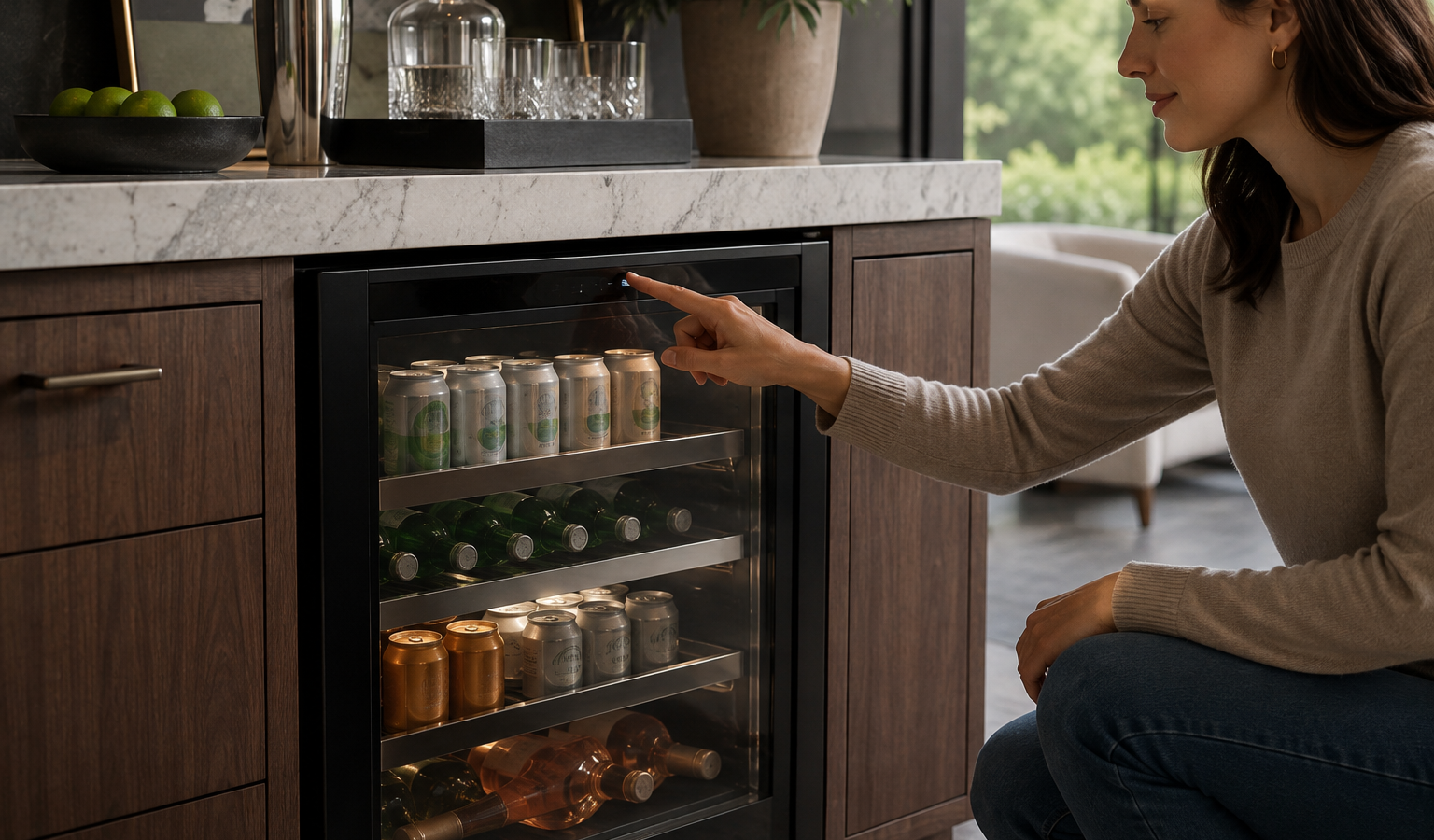
What Temperature Should a U-Line Beverage Center Be Set To?
Pick a U-Line beverage center setpoint for beer, soft drinks, or mixed use—and verify with a shelf thermometer, not guesswork.

Setpoint versus actual shelf temperature
The number on a U-Line beverage center display is a control target, not a guarantee at every shelf. Glass doors, ambient kitchen heat, and how tightly you pack cans all shift the real drink temperature. Keep a small appliance thermometer on a middle rack for 24 hours after any change before deciding the unit is wrong.
If you also store chocolate, garnishes, or opened mixers, treat the cabinet more like a food fridge and aim colder than a beer-only display.
Practical target ranges
| Use case | Typical target | Notes |
|---|---|---|
| Lager / light beer service | 34–38 °F | Cold enough to feel crisp without freezing cans |
| Soft drinks / water | 36–40 °F | Slightly warmer saves runtime |
| Mixed bar with dairy mixers | 35–38 °F | Prioritize food safety |
| Short-term party chill-down | Lower temporarily | Return to normal after; watch freeze risk |
Habits that keep temperatures honest
- Avoid parking the unit beside an oven vent or in direct afternoon sun.
- Let hot leftovers or warm cases cool before loading—one warm case can raise the average for hours.
- Do not cover rear vents with stacked boxes of mixers.
- After cleaning, re-check the setpoint; some controls wake in unexpected modes.
Seasonal drift
Summer kitchens push beverage centers harder. If drinks taste warm only in July, improve ventilation and sun control before permanently dropping the setpoint into freeze territory. Chronically icing cans near the rear wall means you went too cold or airflow is uneven.
Matching setpoint to what you actually store
Hosts often set one number for “everything cold” and then wonder why craft beer freezes while sparkling water feels perfect. Segment if you can: keep dairy mixers and opened juices toward the colder verified shelf, and accept that glass-door browsing zones run a little warmer. Dual-purpose rooms with ovens nearby may need a slightly more aggressive target in summer and a gentler one in winter to avoid freeze risk.
Write the verified thermometer reading on a tape label inside the door after you stabilize a setting. That baseline makes future “it feels warm” complaints measurable instead of subjective.
If children or staff change the control often, enable any lock feature your model offers—or place a small note with the agreed target beside the display.
When the setpoint “won’t stick”
If the display returns to a wrong value, ignores buttons, or shelf temps disagree wildly with the set point, the control or sensor path may need independent testing. That is beverage center repair territory—not a DIY board swap.
For broader care tips, browse the blog. Questions about a specific model? Send us the details.

Turn this guide into a clear on-site diagnosis
FAQ
Frequently asked questions
Only until the system hits capacity or freezes—verify with a thermometer.
Short term yes; long-term cellaring needs wine-specific humidity and vibration control.
Warm air rises and door openings hit the top first—leave space for circulation.
Keep reading
More from the guides
How to Extend the Life of Your U-Line Refrigerator, Wine Cooler or Ice Maker
Longevity habits for U-Line refrigerators, wine coolers, and ice makers: airflow, seals, water quality, and early service.
When Should You Repair vs Replace a U-Line Appliance?
A clear framework for repair versus replace decisions on U-Line undercounter refrigeration and ice equipment.
How to Clean U-Line Refrigerator Condenser Coils
Clean U-Line refrigerator condenser coils safely: access tips, tools, cadence, and when dirt means a service visit instead.
Turn this guide into a clear on-site diagnosis
Book a repair
Tell us what’s wrong — we’ll take it from there
Share a few details and we’ll confirm an appointment. Prefer to talk? Call us and we’ll help right away.
Address
1200 Brickell Ave, Suite 400, Miami, FL 33131
Phone
(305) 555-0142
Email
service@example.com
Hours
Mon–Sat: 8:00 AM – 7:00 PM
Service area
Serving Miami, New York, Houston, Los Angeles and San Diego metro areas.
Response time
Same-day and next-day appointments in most areas.
Request your repair
Fill in the form below and we’ll confirm an appointment.